
A garden can get regular care and still struggle when soil conditions do not suit its plants. The best soil pH tester can help you check whether acidity or alkalinity is part of the problem. Soil pH can affect plant health and growth, even when you water and tend your garden well.
You can choose a simple meter, a digital pen, or a color-based kit. Each gives you a different way to check the soil, with different levels of effort and detail. A reading is a practical guide, not a full nutrient analysis, so it cannot explain every plant problem.
In this roundup, you’ll find options for home gardeners with different needs, from quick checks to more controlled testing. The goal is to help you choose a tool that fits your plants and the decisions you need to make. First, it helps to understand why soil conditions matter to plant growth.
Key Takeaways
- Soil acidity and alkalinity can affect plant health and growth.
- Your plants may need a different pH than the lawn nearby.
- A meter reading offers guidance, not a full nutrient analysis.
- Choose between an analog meter, digital pen, or color-based kit.
- Test representative spots before making changes to your soil.
Why Does Soil pH Matter to Your Plants and Lawn?
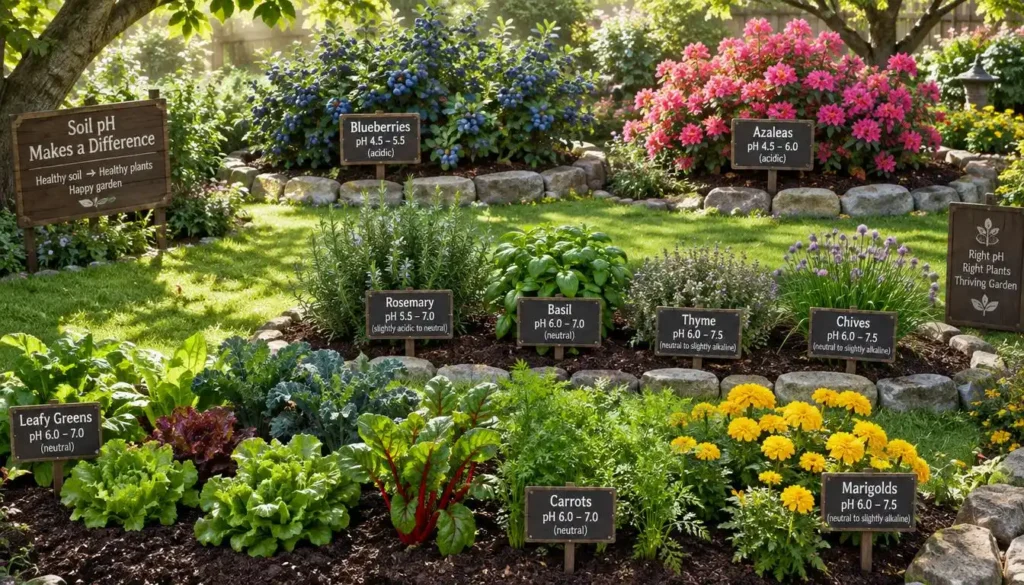
A lawn can be within its usual pH range while a neighboring plant still needs a different soil condition. Soil pH affects nutrient availability, meaning how readily nutrients in soil are accessible for plant roots to absorb. An unsuitable reading can limit uptake even when nutrients are present.
The pH scale runs from 1 to 14, with 7 neutral. Lawns generally do best in slightly acidic to neutral soil, around pH 6.2-7.0. That lawn range is not a universal target for every garden bed.
Match a soil pH target to the plants in that area. A lawn’s usual range may not suit a nearby garden bed.
Highly acidic soil can harm grass roots, while an unsuitable pH can affect a plant’s access to nutrients. Soil health also depends on more than one number, so a pH reading cannot explain every sign of poor growth.
Check the needs of the plant or lawn before you treat its soil. The right testing method can help you see whether pH may be part of the issue, without mistaking one reading for a full diagnosis.
Because pH can shape nutrient uptake, a check can be useful before planting or treating a lawn. Your practical next choice is the method that gives you information you can use.
Best Soil pH Tester Picks for Different Gardens
If you want the shortest route to a choice, first decide whether you value a sturdy analog reading, multiple quick checks, or a calibrated digital pen. These top picks cover common home garden needs, with different displays and added readings. Use the table to shortlist products, not to assume every extra measurement is equally useful.
| Product | Display type | Additional readings | Indoor or outdoor use |
|---|---|---|---|
| Gain Express ZD-06 | Analog | Moisture | Both |
| Raintrip 4-in-1 | Analog | Moisture, light, nutrients | Both |
| Apera Instruments GroStar GS2 | Digital | Soil temperature | Both |
| Yamron 4-in-1 | Digital | Temperature, moisture, sunlight | Both |
Six soil pH meters were tested against a professional lab soil test over two weeks. Each meter was used five times, and readings were averaged across multiple locations. The product range was $10-$200.
The comparison considered how readings matched the lab result, along with consistency, ease of use, durability, and value. That process gives you a grounded way to compare each soil meter, but results from one test do not promise identical readings in every garden.
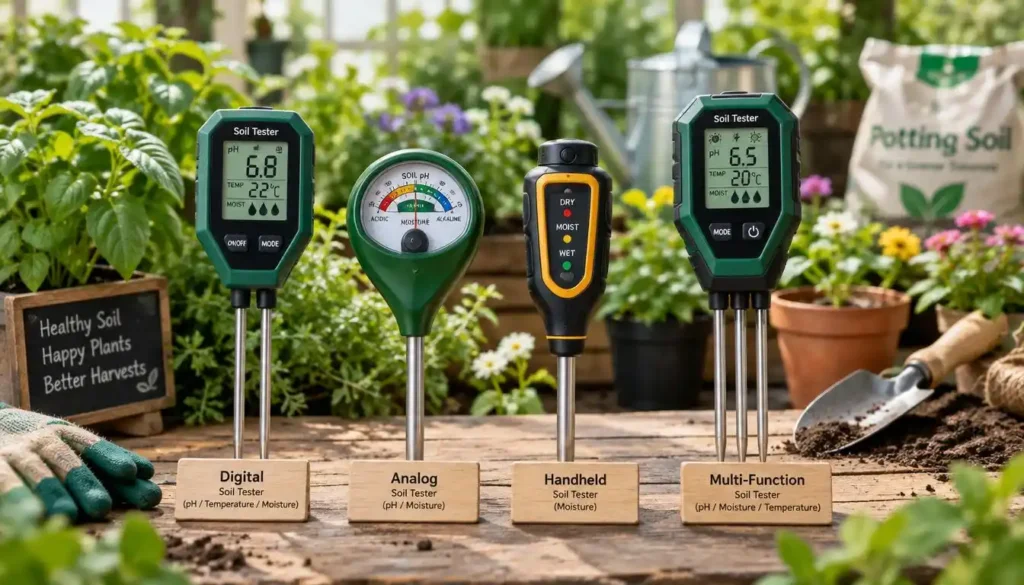
For a general-purpose choice, start with the Gain Express, which led the comparison for reliable readings. The other picks fit different priorities, including added checks, digital display, or testing beyond soil.
Best Overall: Gain Express ZD-06 Soil pH Meter
For a general home garden, the Gain Express is the clearest pick when sturdy construction and consistent pH readings matter more than a digital screen. Its 11.6-inch probe has a thick, heavy-duty build, and its analog display faces upward. In testing, its readings closely matched the lab result.
A soil sample with a lab pH of 6.42 produced Gain Express readings from 6.2-6.4. The meter earned 5/5 for accuracy, consistency, and durability, plus 4.5/5 for ease of use and 4.7/5 for value.
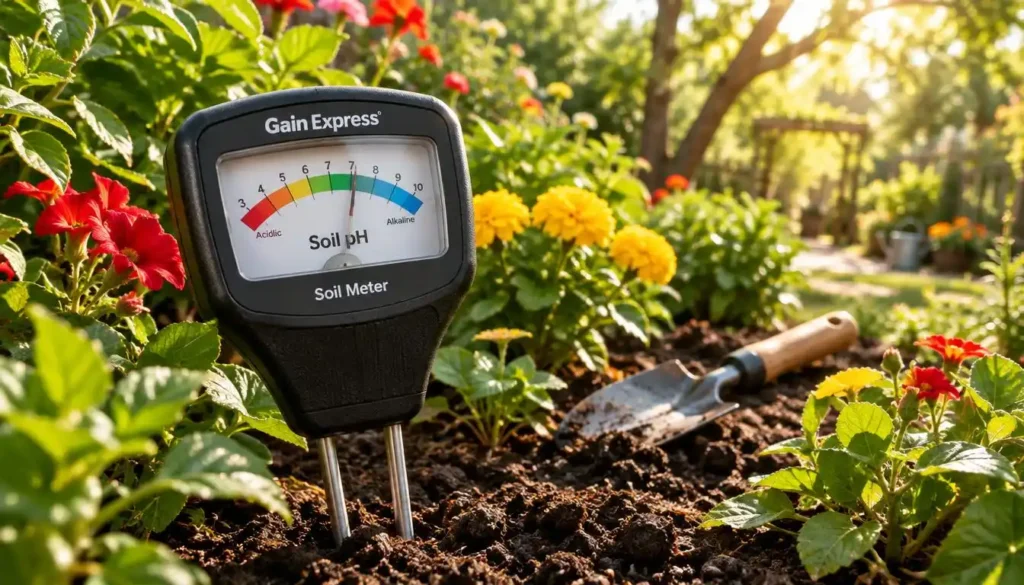
The model measures pH from 3 to 8. That range covers many common garden checks, but may not suit you if you need to measure above pH 8. Check the range against the soil conditions you expect to test.
The upward-facing dial is easy to glance at while you stand beside a bed. It also avoids batteries and a digital menu, which can make routine checks feel straightforward. A clear reading still depends on following the meter’s directions and checking more than one spot.
The Gain Express is a strong soil tester if dependable readings and a durable probe matter most. Its readings were within a narrow band around the lab result, and the ratings reflect its steady performance across the test.
Choose another model if a digital display or more functions matter more than a sturdy, focused pH check. A less costly multifunctional meter may fit better when a rough estimate and extra readings matter more than precision.
Best Budget 4-in-1 Soil Tester: Raintrip
If you mainly want a quick, inexpensive check across garden beds and pots, the Raintrip combines several readings in one battery-free tool. It reads pH, soil moisture, and light, plus a broad “nutrients” reading. That nutrients feature is not specific enough to guide nutrient decisions.
Its foldable head makes the tool easier to store and move between pots. The Raintrip soil tester can give you a fast look at moisture levels as well as pH, which may help with simple routine checks. Still, its analog scale lacks fine markings.
For soil with a lab pH of 6.42, Raintrip readings were usually about 6.5-6.6. The result tracked close to the lab value, though its dial gives you less detail than a fine-scale or digital display.
Testing gave the Raintrip 4.5/5 for ease of use, consistency, and durability. It earned 4/5 for accuracy and 4.3/5 for value. Those results support its role as a practical, budget-friendly check rather than a tool for close pH decisions.
There is little setup to manage, and no battery to replace. That convenience may suit a home garden where you want a ballpark estimate across several spots. The reading can help you decide whether a closer check is needed.
Precision matters if a small pH difference will guide a major treatment or a sensitive planting choice. The Raintrip’s scale may not give you enough detail for that call. Point yourself toward a calibrated digital option when you need tighter pH precision.
Best Digital Upgrade: Apera Instruments GroStar GS2
If you need to check nutrient solutions as well as garden soil, the Apera offers a level of versatility that a basic probe does not. The GroStar GS2 measures soil pH and temperature, and it can also test soil slurries and nutrient solutions. Its broader use comes with more setup and care.
The kit includes pH 7.0 and 4.0 calibration solutions, a dibber, brush, soaking solution, and carrying case. Calibration took about five minutes. Soil readings came within 0.2 pH points of the lab result.
The meter received 4.5/5 for accuracy and consistency, with 4/5 for durability and value. Its ease of use rating was 3.5/5. Calibration helps you set the digital pen before testing, but you must follow the process with care.
Testing soil also takes more preparation than using a basic probe. The Apera calls for a soil pathway that suits its method, so it may not be the simplest choice for a quick check outside. Its slender pen design also deserves careful handling.
For a grower who checks soil, slurries, and nutrient solutions, the range of uses may justify that added work. It can serve users who need a more controlled reading than a rough garden estimate provides. Follow the supplied directions for calibration and care each time you use it.
This is a useful digital upgrade when accuracy and testing options matter more than speed. You may not need its wider range if you only check a few garden beds. For a faster, easier-to-read digital choice, consider a simpler meter.
Best Easy-to-Read Digital Meter: Yamron 4-in-1
A rotating digital display makes it easier to read a soil check without crouching beside the bed. The Yamron measures pH, soil temperature, moisture, and sunlight, with buttons to switch between readings. Its display is clear, and a result takes about 10 seconds.
The digital format may suit you if you want a quick check across potted plants and garden beds. Its mix of pH and other readings can offer a basic snapshot of growing conditions in one tool. The controls keep each reading easy to select.
The meter runs on four AAA batteries, which are not included. Its ratings were 5/5 for ease of use, 4/5 for accuracy and consistency, and 4.5/5 for durability and value.
Some measurements were inconsistent during testing, so do not treat one spot as the whole bed. Take readings from multiple areas and average them for a more useful picture. Differences between spots may reflect the soil itself, not only the meter.
For a home grower, the quick read and rotating screen can make routine checks easier to manage. Temperature, moisture, and sunlight readings may help you notice changes around containers and beds. Each number answers a different question, so do not use one as a substitute for another.
Choose the Yamron if you want a simple digital tool with several readings and can supply its batteries. A probe is not the only option, though. Some gardeners may prefer a color-based kit over any electronic display or probe.
When Is a Chemical Soil pH Test Kit a Better Choice?
A color-based test kit can suit you if you only need a straightforward pH check and would rather not manage a probe. The Jonathan Green Soil pH Test Kit uses a test tube, a powder capsule, and a pH range color chart. It gives you a color match, not a digital value.
The stated test time is five minutes. The kit recommends distilled water or rainwater because tap water may affect the reading. Follow its directions closely, since the water you use is part of the test.
A test kit avoids batteries and does not require you to insert a probe into the soil. Instead, you compare the test color with the chart. That can work well for a basic home check, though matching colors may feel less direct than reading a number.
A color result can help you decide whether pH needs a closer look. It does not replace a broader analysis of soil nutrients or soil fertility. If plant growth remains poor, a pH test alone may not tell you what else the soil needs.
The kit is a practical option when you want one simple soil test without electronic parts. You still need to follow the included water guidance and read the chart with care. The available products differ in upkeep, display, and extra functions.
With analog meters, digital pens, and a soil pH test kit to choose from, focus on the checks that matter in your garden. A few practical questions can narrow down the right tool.
How Do You Choose the Right Soil Tester?
The right tester is the one whose method and upkeep match the decision you need to make in your garden. Choose by how much precision you need, where you will test, and which extra readings you will use. No method gives every gardener the same balance of detail and effort.
Consider how often you will test and whether you are checking a lawn, pots, or separate beds. A soil meter used outdoors may need a different approach from a kit used at a workbench. The best soil choice is the one you can use as directed.
Match the method to the precision you need
An analog probe can offer a ballpark check, but the scale detail varies by model. A digital readout gives you a number that may be easier to read closely, though accuracy still depends on the device and its use.
A color-based test gives you a chart match rather than an electronic reading. It can suit a simple soil test, but your result depends on judging the color. Do not assume all meters or kits have the same accuracy.
Check calibration, soil conditions, and probe design
Calibration needs vary by model, and some meters need moist soil. A sturdy probe can matter in dense soil, where a thin design may be harder to insert. Check the stated soil conditions before you buy.
| Method | What it gives you | What to check before buying |
|---|---|---|
| Analog probe | Analog reading with the model’s stated extra functions | Scale detail and soil conditions |
| Digital pen | Digital pH reading and possible added temperature measurement | Calibration and care needs |
| Chemical soil pH kit | Color-chart result | Included supplies and water instructions |
The table shows why the word “tester” can mean quite different tools. Check the probe design and the care steps, not only the list of features on the package.
Pay for extra readings only when you will use them
If you only need pH, you may not gain much from a tool with several extra readings. Soil moisture can help with watering checks, while temperature or light readings may fit particular growing needs.
A digital NPK soil tester should not be assumed to provide dependable nutrient analysis unless you have clear evidence of what it measures. Extra features can add information, but they do not make every result useful for every decision.
Compare products for ease use, upkeep, and the information you want from the tool. A short buying checklist can help you judge additional features without paying for readings you will ignore.
- Intended setting: lawn, garden bed, or indoor pots.
- Required precision: rough check or closer pH reading.
- Calibration or power needs: time, supplies, and batteries.
- Genuinely useful added measurements: moisture, temperature, or light.
Once you choose a tool, good soil testing depends on consistent sample spots and the model’s own directions. Preparing samples and following those instructions helps you compare readings fairly.
How Can You Test Soil pH at Home?
A result is only useful if the spot you tested represents the area you plan to plant or treat. Check several points in that area, and keep visibly different beds or lawn areas separate. One isolated spot may not represent the whole area.
Soil can vary across a yard, especially between a lawn and a nearby bed. Separate checks help you avoid treating one patch as if it stood for every growing area. Record where each result came from.
Take samples from representative spots
Choose several points in the area you want to understand, rather than relying on a single location. Keep spots with visibly different soil, plants, or use separate. That gives you a clearer view of each part of the garden.
A test near a path or a compost pile may not reflect the rest of the bed. The same is true for a lawn with sections that look or grow differently. Sample the areas you plan to compare or treat.
Follow the chosen tester’s instructions
Check the device’s directions for soil preparation, moisture, cleaning, and timing. Meters do not all work alike, so do not carry one model’s routine over to another. The differences below show why the stated conditions matter.
| Model | Soil preparation | Reading time or condition |
|---|---|---|
| Gain Express | Insert the probe and wait | 5-10 minutes |
| Raintrip | Insert at least 4 inches | Readings in about 2 seconds |
| Apera GroStar GS2 | Saturate soil and wait 24 hours before testing | Test after preparation |
| Yamron | Insert the probe | Wait about 10 seconds |
For a chemical kit, use the included directions instead of these meter steps. The Jonathan Green kit recommends distilled water or rainwater, since tap water may affect the reading. Clean a meter as its instructions direct between checks.
- Identify separate areas you want to understand.
- Collect representative checks from each area.
- Prepare soil as the tester instructs.
- Take multiple readings within each separate area.
- Record each reading with its location.
Keep the process similar when you compare results later. Changes in soil preparation or timing can affect a reading, making it harder to tell whether the soil itself changed.
Once you have consistent readings, interpret them against the needs of the plants or lawn in that specific area. A number matters most when you connect it to the place and plants it describes.
What Should You Do With Your Soil pH Results?
A pH result is a reason to make a targeted decision, not an instruction to add lime or sulfur automatically. First compare the reading with the plants in that area, then decide whether any soil amendments make sense. Plant preferences differ, so one number does not suit every bed or lawn.
Soil pH is one part of soil health and fertility, not a full measure of nutrients or growing conditions. A lawn decision may differ from a container or garden-bed decision. Use the result for the place you tested.
Compare the reading with the plants you want to grow
Look up the pH preference for the plant you want to grow before you judge the reading. A lawn may have one goal, while a container plant or garden bed may need another. Soil health also depends on structure, water, and nutrients.
A pH level outside a plant’s preferred range can affect growth, but it does not prove that pH caused every problem. Check other signs of stress, and avoid treating soil fertility as a single-number issue.
Keep a separate record for different areas. A lawn and a vegetable bed may need separate choices, even if they sit side by side. This avoids applying one area’s target to another.
Choose an amendment carefully and retest
Lime can raise soil pH, while sulfur can lower it. Use the product label to guide any soil amendments, and base treatment on a representative test rather than guesswork. Small, targeted steps are easier to assess than a broad treatment based on one spot.
Amendments can change conditions beyond the single reading you noticed. Follow the label for how much to use and how to apply it. Retest later with the same method to see whether the soil level moved toward the plant’s needs.
If the decision would lead to a large treatment, repeat your readings or use a lab test to confirm them. A second check can help you avoid acting on a reading that reflects one unusual spot.
- Check the plant’s pH preference.
- Confirm the result with repeat readings or a lab test if it would drive a large treatment.
- Apply an appropriate amendment according to its label.
Use the result as part of a wider view of the soil, not as a full account of nutrients or plant health. Gardeners who also want moisture information should judge those readings separately from pH.
Can One Sensor Measure Both Soil Moisture and pH?
A combination meter can save you from carrying separate tools, but its moisture reading answers a different question from its pH reading. Some soil testers measure both, while separate measurements may use different probes or controls. A moisture result does not establish pH or nutrient status.
Follow the model’s instructions and account for soil conditions, since both can affect sensor readings. Results may vary between spots, even within one bed. A rough moisture or pH reading is not a complete diagnosis.
Soil moisture and pH describe different conditions. Do not treat one sensor reading as proof of the other or as a full soil diagnosis.
That is the main drawback of sensors: the number may look precise, but its meaning depends on the model and where you used it. A lawn, pot, and garden bed can have different soil conditions. Use the reading as one clue, not as a reason to make a major treatment by itself.
- Test more than one spot.
- Follow the meter’s instructions for soil moisture and cleaning.
- Confirm consequential decisions with a suitable soil test.
If you want a sturdy general meter, the Gain Express is a practical starting point. The Yamron offers fast, multifunctional checks, while the Apera suits growers who need a calibrated pen for soil and solutions.
Conclusion
For most home gardeners, the best choice is the tester you can use consistently and interpret with confidence. Match the tool to the precision and upkeep you need, then use readings from representative spots before changing soil.
The Gain Express is a sturdy general-purpose probe, the Raintrip suits quick approximate checks, and the Apera fits growers who need a calibrated pen for soil and solutions. Each supports a different kind of decision.
Choose one representative garden area, take several readings with your selected tool, and record them before deciding whether to amend the soil.
FAQ
What is a good soil tester for grass?
A sturdy outdoor-capable pH meter such as the Gain Express is a practical pick for grass. Its readings matched a lab result closely in testing, and its probe suits garden use. Check the lawn soil before choosing an amendment, since lime or sulfur can change pH. A test can help you avoid treating grass based on appearance alone.
What is a good pH meter for soil and water?
The Apera GroStar GS2 can test soil, soil slurries, and nutrient solutions. It includes pH 7.0 and 4.0 calibration solutions, and calibration took about five minutes in testing. Soil testing needs sample preparation, so it takes more work than a basic probe. Follow its care directions and handle the pen with care.
How can you test soil pH at home?
Use a meter or color-based kit according to its instructions, and check representative spots in the area you care about. Keep different beds or lawn areas separate so one result does not stand for all your soil. The Jonathan Green kit uses a tube, powder, and color chart. It recommends distilled water or rainwater, since tap water may affect the reading.
What is the best soil moisture and pH sensor?
The Yamron provides digital pH and moisture readings, along with temperature and sunlight. It uses four AAA batteries, which are sold separately. Its screen rotates for easier viewing, and results take about 10 seconds. Take checks from multiple spots, since measurements can vary. Choose this type if you will use the extra readings, not just the pH number.
Is there an accurate soil pH tester?
Yes, the Gain Express and Apera both produced readings close to a lab result in testing. Gain Express readings were 6.2-6.4 for soil with a lab pH of 6.42. Apera readings came within 0.2 pH points after calibration. Results can still depend on sample preparation and soil conditions, so follow the model’s directions.
What are the downsides of using a soil moisture sensor?
A soil moisture reading does not tell you the soil’s pH or nutrient status. Readings can depend on soil conditions, placement, and the specific model. Check more than one spot and follow the meter’s instructions for moisture and cleaning. If a reading would lead to a major change in care, confirm it with a suitable soil test.
Which soil moisture sensor is best?
The best choice depends on whether you want moisture alongside pH, temperature, or light. The Raintrip offers analog readings without batteries, while the Yamron gives digital readings and needs four AAA batteries. The models also differ in display and precision. Pick the features you will use, and treat extra readings as separate clues rather than a complete soil report.
What are the disadvantages of using sensors?
Sensors can vary by location and need model-specific preparation, so one reading may not describe a whole bed. Some require certain soil conditions, and other models need calibration or power. Follow the instructions, take readings from multiple spots, and record their locations. Confirm major soil-treatment decisions with repeat readings or a suitable soil test.